SaaS platforms · Web applications
A franchise chain produced 200 self-billing invoices for franchisees and 300 customer invoices by hand every week. We built a platform that reads the revenue lists, checks everything and posts the invoices to the accounting system automatically.
This project is anonymised: the approach and scale are representative, we do not name the client.
Every single week: collect revenue lists from the point-of-sale systems of more than 150 locations, calculate per franchisee what the chain owes them and per customer what needs to be invoiced. The finance team had found a clever trick with subscriptions in their invoicing package, but still matched the revenue lists against those subscriptions by hand and created the invoices one by one. That consumed a full FTE, and yet every week a wrong amount or a forgotten location slipped through. Franchisees called about discrepancies, credit notes piled up and nobody could say with certainty whether a run was complete. The chain came with one question: can this simply be correct, without someone spending a whole week on it?
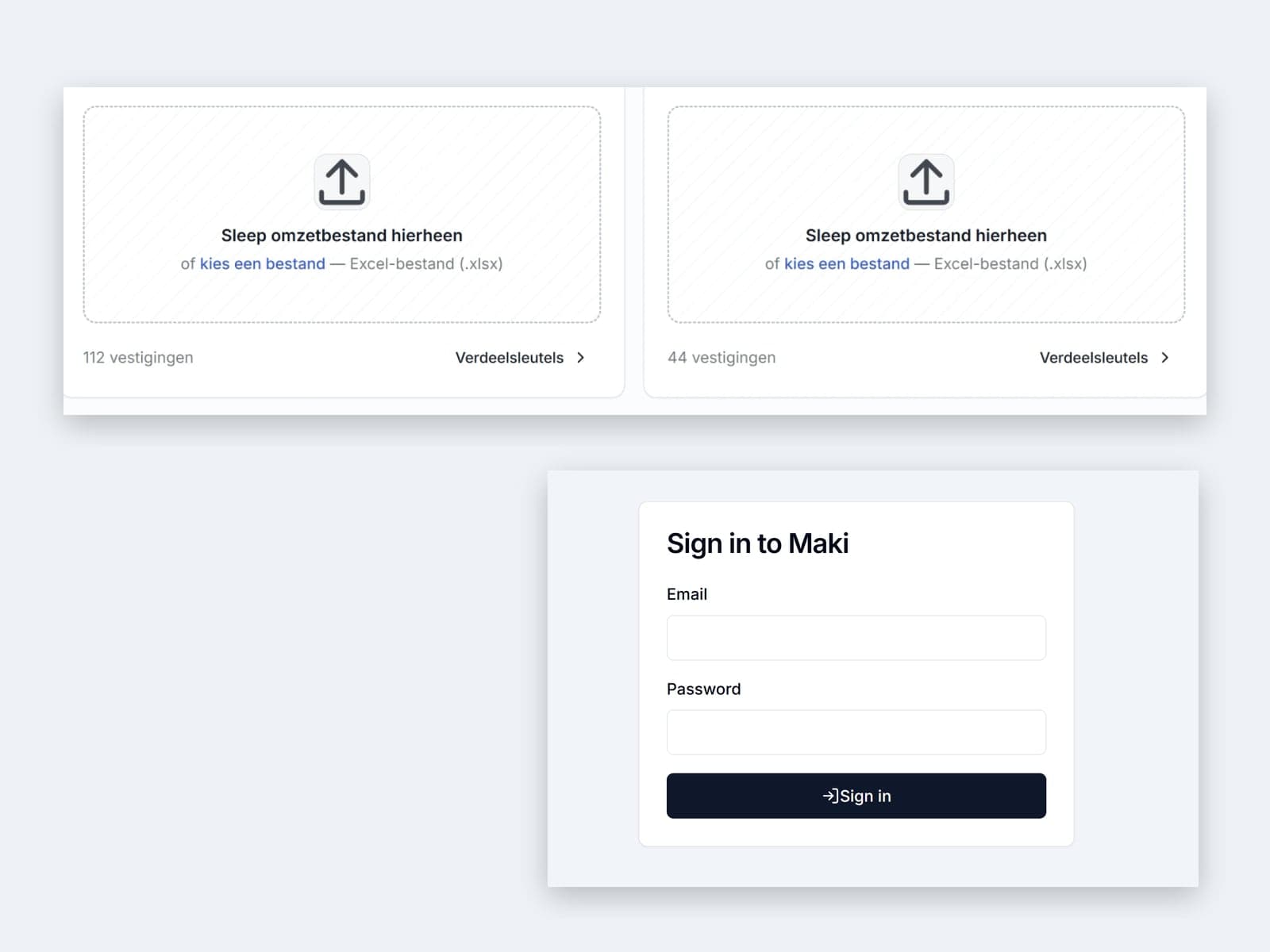
We started at the finance team's kitchen table: for two weeks we watched how a run really worked, which exceptions existed and where things went wrong. That produced a set of allocation keys: per location and per product group, which share of revenue goes to the franchisee and which share the chain invoices. We entered those keys into the platform together with the finance manager, so they can maintain them themselves when a contract changes. Then we built the platform itself: revenue lists are uploaded per chain or fetched automatically, the system first checks them for missing locations, duplicate lines and deviating amounts, and only when all errors are resolved can a run be started. Each run creates the self-billing and customer invoices and pushes them through an integration straight into the invoicing and accounting system. An audit trail records who uploaded which list, which errors were corrected and which invoices came from which run. For the first three weeks the platform ran as a shadow run alongside the manual process; once the figures matched to the cent three times in a row, the manual route was retired.
Free consultation
Tell us what you want to achieve in a free intake. You will get an honest answer within 24 hours.